Spring Vegetable Chowder
Highlighted under: Special Food
I love making Spring Vegetable Chowder when the first vegetables of the season appear at the market. The vibrant colors and fresh flavors bring joy to my kitchen and warmth to my soul. Each spoonful is a reminder that spring is here, and it’s packed with nutrients and delightful textures. Plus, I appreciate how versatile this recipe is; you can easily swap out any vegetables you have on hand. This chowder is perfect for lunch or dinner, and with just a little prep, you can enjoy a comforting bowl in no time!
When I first tried making chowder, I was surprised at how easy it was to create a dish that feels so luxurious. I experimented with a variety of spring vegetables and finally landed on the combination that brings the best balance of flavors—sweet peas, corn, and tender carrots. The key is to sauté the vegetables before adding the broth, enhancing their natural sweetness and creating a depth of flavor.
One evening, I decided to add a handful of fresh herbs from my garden, and it took the chowder to the next level. The fresh parsley and thyme added an aromatic lift that perfectly complemented the richness of the creamy broth. Now, I never skip this step, and I recommend you don’t either!

Why You'll Love This Recipe
- Fresh and vibrant flavors that celebrate the season
- Creamy texture without heavy cream, making it lighter
- Easy to customize with your favorite vegetables
Choosing Your Vegetables
One of the joys of Spring Vegetable Chowder is its adaptability. You can incorporate a range of seasonal vegetables based on your preferences or availability. Consider adding diced zucchini or asparagus for a fresh crunch. If you want a slightly sweeter profile, try using butternut squash instead of potatoes. Aim for about 4 cups of vegetables total to maintain the balance of flavors and textures, and remember to cut everything into similar-sized pieces for even cooking.
When selecting your vegetables, freshness is key. Look for brightly colored options with no blemishes. For instance, crisp carrots and vibrant peas will not only enhance the visual appeal but will also provide the best flavor. If you opt for frozen vegetables, thaw them first to ensure even cooking. Keep in mind that cooking times may vary slightly when using frozen produce, so monitor them closely as you proceed with the steps.
Creating the Ideal Consistency
The creaminess of this chowder is achieved without heavy cream, which is perfect for a lighter option. I recommend using whole milk for a rich texture; however, for a dairy-free version, almond or oat milk can be good substitutes. If you're looking to enhance the chowder's creaminess further, you can blend a portion of the cooked potatoes with some of the broth before adding the milk. This will yield a velvety soup without overwhelming it with added fat.
To achieve the right consistency, it’s important to monitor the cooking times closely. Simmering the chowder for 15-20 minutes allows the potatoes to break down slightly while keeping some structure. If the chowder turns out too thick, simply stir in additional vegetable broth or water to reach your preferred consistency. Conversely, if you find it too thin, you can mash a few potatoes in the pot to naturally thicken it up!
Serving Suggestions and Storage
This chowder is best served warm, and garnishing with fresh parsley not only adds a pop of color but complements the spring flavors beautifully. Consider adding a sprinkle of crumbled feta or parmesan cheese for an additional layer of flavor. Pair the chowder with crusty bread or a simple salad for a well-rounded meal. For a heartier option, serve it alongside a quiche or savory pie, making it a delightful spring lunch or dinner.
If you have leftovers, store the chowder in an airtight container in the fridge for up to three days. To reheat, warm it gently on the stove, adding a splash of broth if it’s too thick. This chowder can also be frozen for up to three months; just make sure to let it cool completely before transferring to freezer-safe containers. Thaw overnight in the refrigerator for best results before reheating. It's a convenient way to enjoy a healthy meal during busier weeks!
Ingredients
Gather these fresh ingredients for your chowder:
Chowder Ingredients
- 2 tablespoons olive oil
- 1 medium onion, diced
- 2 cloves garlic, minced
- 2 medium carrots, diced
- 1 cup fresh or frozen peas
- 1 cup corn (fresh or frozen)
- 2 medium potatoes, diced
- 4 cups vegetable broth
- 1 cup milk or cream
- Salt and pepper to taste
- Chopped fresh parsley for garnish
Make sure to have everything ready before starting to ensure a smooth cooking process.
Instructions
Follow these simple steps to create your chowder:
Sauté the Onions and Garlic
In a large pot, heat the olive oil over medium heat. Add the diced onion and minced garlic, sautéing until the onions become translucent, about 5 minutes.
Add Carrots and Potatoes
Add the diced carrots and potatoes to the pot. Stir well and cook for another 5 minutes to slightly soften the vegetables.
Incorporate Peas and Corn
Stir in the peas and corn, cooking for an additional 5 minutes, then pour in the vegetable broth. Bring the mixture to a gentle boil.
Simmer and Add Milk
Lower the heat and let the chowder simmer for about 15-20 minutes, or until the potatoes are tender. Stir in the milk or cream and season with salt and pepper to taste.
Serve and Garnish
Ladle the chowder into bowls, garnishing with chopped fresh parsley before serving. Enjoy your spring meal!
Serve hot, and feel free to add crusty bread or a side salad for a complete meal.
Pro Tips
- For an extra layer of flavor, try adding a pinch of nutmeg to the chowder just before serving. It's a unique twist that complements the creaminess perfectly.
Ingredient Benefits
Each vegetable in this chowder offers its unique nutritional benefits. For example, carrots provide a good dose of beta-carotene, which is essential for eye health. Peas add protein and fiber, making this dish feel hearty without being heavy. Additionally, the use of vegetable broth serves as a flavorful foundation without excessive calories, while still enriching the chowder with a depth of flavor that elevates the overall dish.
Another noteworthy ingredient is garlic, which not only adds aroma and taste but is also known for its immune-boosting properties. Using fresh garlic is crucial; the difference in flavor compared to pre-minced options is significant. Sautéing it with the onions creates a fragrant base that sets the tone for the entire dish, ensuring that each bowl is packed with savory goodness.
Variations and Add-Ins
To switch up the flavors, consider adding fresh herbs like thyme or dill, which can elevate the freshness of the chowder. Additionally, for a spicy kick, a pinch of red pepper flakes can be stirred in during cooking. If you enjoy a more robust chowder, try incorporating cooked bacon or pancetta at the beginning for a smoky flavor contrast against the fresh vegetables.
For a heartier chowder that could serve as a main dish, feel free to mix in cooked lentils or shredded rotisserie chicken. These additions can boost the protein content without compromising the lightness of the dish. Keep in mind that adjustments to cooking times may be necessary if you're adding ingredients that require longer cooking, such as lentils, which typically take about 20-30 minutes to become tender.
Troubleshooting Tips
If your chowder turns out too salty, adding extra diced potatoes can help absorb some of the saltiness while enhancing the overall dish. Alternatively, you can dilute it with additional broth or water, but be sure to recalibrate seasonings afterward. Taste before serving to ensure it meets your preferences.
In case your chowder appears too thin, consider making a slurry with a little corn starch and cold water, then add it to the simmering soup. Stir continuously until it thickens. Remember to let it simmer for an additional 5-10 minutes after adding the slurry to cook out the starchy flavor, resulting in a creamy, satisfying chowder.
Questions About Recipes
→ Can I make this chowder ahead of time?
Yes, you can prep and cook the chowder a day in advance. Just reheat gently before serving.
→ Is this recipe vegan-friendly?
Absolutely! Simply substitute the milk or cream with coconut milk or a plant-based milk.
→ What other vegetables can I add?
Feel free to include zucchini, asparagus, or whatever fresh veggies you love. Just make sure to chop them into similar sizes.
→ How long does this chowder last in the fridge?
It can last for about 3-4 days in the refrigerator. Store it in an airtight container.
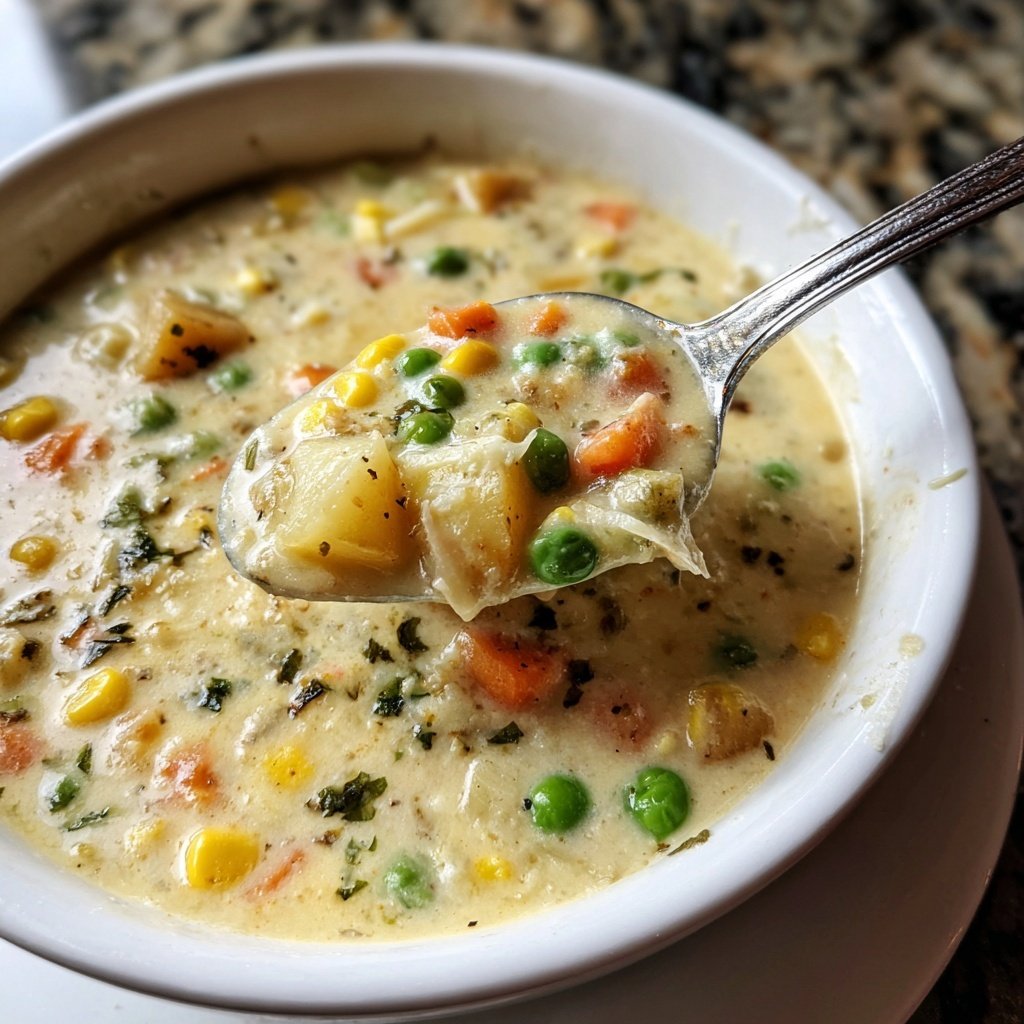
Spring Vegetable Chowder
Created by: Yasmin Thornton
Recipe Type: Special Food
Skill Level: Beginner
Final Quantity: 4 servings
What You'll Need
Chowder Ingredients
- 2 tablespoons olive oil
- 1 medium onion, diced
- 2 cloves garlic, minced
- 2 medium carrots, diced
- 1 cup fresh or frozen peas
- 1 cup corn (fresh or frozen)
- 2 medium potatoes, diced
- 4 cups vegetable broth
- 1 cup milk or cream
- Salt and pepper to taste
- Chopped fresh parsley for garnish
How-To Steps
In a large pot, heat the olive oil over medium heat. Add the diced onion and minced garlic, sautéing until the onions become translucent, about 5 minutes.
Add the diced carrots and potatoes to the pot. Stir well and cook for another 5 minutes to slightly soften the vegetables.
Stir in the peas and corn, cooking for an additional 5 minutes, then pour in the vegetable broth. Bring the mixture to a gentle boil.
Lower the heat and let the chowder simmer for about 15-20 minutes, or until the potatoes are tender. Stir in the milk or cream and season with salt and pepper to taste.
Ladle the chowder into bowls, garnishing with chopped fresh parsley before serving. Enjoy your spring meal!
Extra Tips
- For an extra layer of flavor, try adding a pinch of nutmeg to the chowder just before serving. It's a unique twist that complements the creaminess perfectly.
Nutritional Breakdown (Per Serving)
- Calories: 300 kcal
- Total Fat: 8g
- Saturated Fat: 2g
- Cholesterol: 5mg
- Sodium: 380mg
- Total Carbohydrates: 52g
- Dietary Fiber: 7g
- Sugars: 6g
- Protein: 8g