Classic French Croissants
Highlighted under: Classic Food
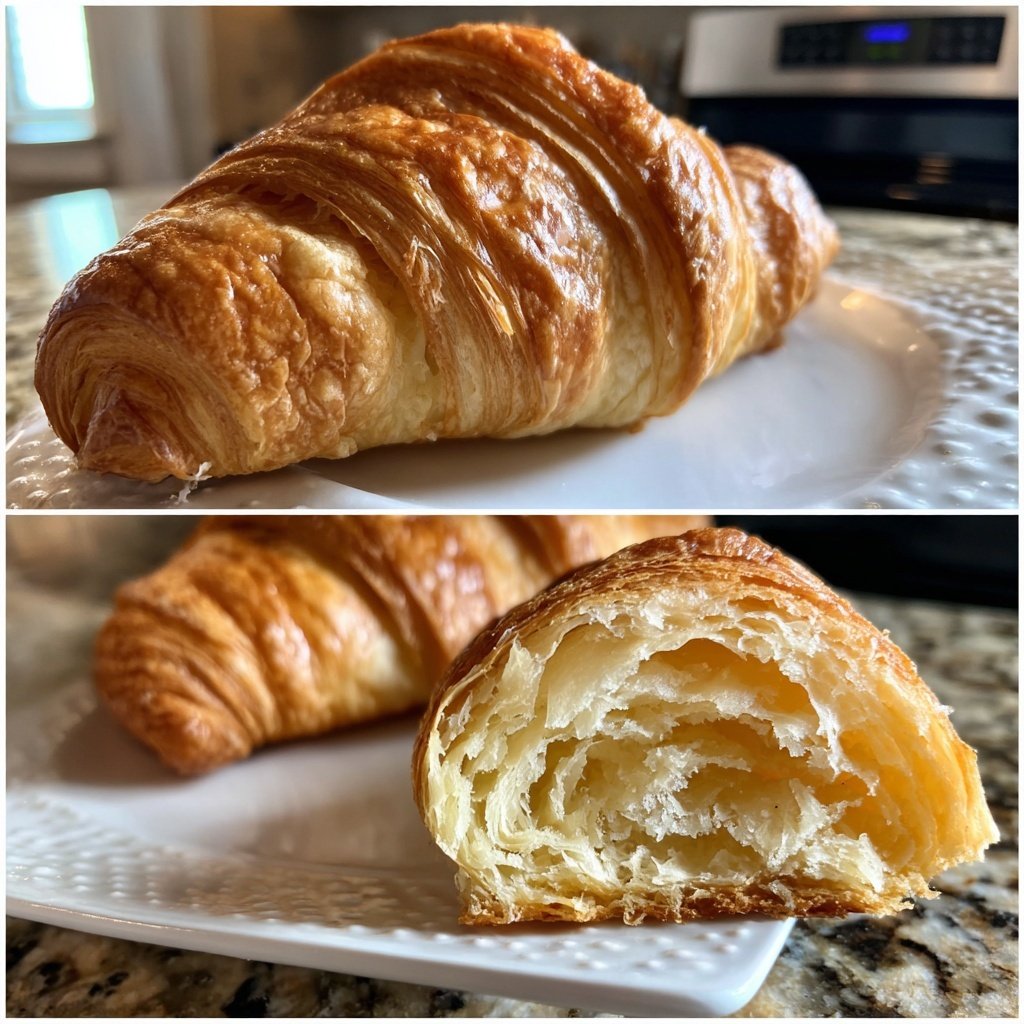
I have always been captivated by the flaky, buttery goodness of classic French croissants. The process, while time-consuming, is truly rewarding, allowing me to enjoy the aroma of fresh pastries filling the kitchen. Each bite melts in your mouth, with layers of crispiness that offer a delightful contrast to the soft inside. I love that I can control the ingredients, ensuring the croissants are made with care and quality. With this recipe, I invite you to embark on a baking adventure to create these delightful treats from scratch.
Creating classic French croissants has been one of my most satisfying culinary pursuits. The first time I tried this recipe, I was amazed by how the simple combination of flour, yeast, and butter could transform into such exquisite pastries. One tip that truly helped me was letting the dough rest in the fridge between folding stages; it prevents the butter from melting and ensures those beautiful layers.
As I perfected this recipe, I learned that patience is crucial. Allowing the dough to ferment slowly enhances the flavor and texture dramatically. Croissants are meant to be savored, so take your time, enjoy the process, and feel free to experiment with fillings like almond paste or chocolate for a delightful twist!
Why You'll Love This Recipe
- The unrivaled freshness of homemade croissants
- Layers of flaky goodness that are simply irresistible
- Perfect for breakfast, brunch, or any special occasion
Understanding the Dough
The foundation of any great croissant lies in the dough, which is made from a simple mixture of flour, water, salt, sugar, and yeast. The flour not only provides structure but also contributes to the final texture of the croissants. Using high-protein all-purpose flour ensures that the dough develops enough gluten to support the layering of butter. Gluten, when kneaded, allows the dough to stretch and rise, creating those iconic flaky layers. Kneading for 10 minutes is crucial; you want to achieve a smooth and elastic dough.
The role of yeast in the dough is crucial for achieving the perfect rise. It ferments, producing carbon dioxide that contributes to the dough's lightness. When mixing the yeast with warm milk, ensure that the milk is not too hot, as temperatures above 45°C (113°F) can kill the yeast, leading to dense, sad croissants. To foster a successful rise, let the dough sit in a warm, draft-free environment after shaping; this promotes optimal fermentation.
Perfecting the Lamination Process
Lamination is the process of folding butter into the dough, which creates those many layers that we crave in a croissant. This step requires chilled butter that's pliable but not too soft – ideally between 15-20°C (59-68°F). If the butter begins to melt while rolling, your croissants will not puff properly during baking, resulting in a dense pastry. To achieve the perfect lamination, roll out the dough gently and consistently; apply even pressure to maintain uniformity in thickness.
After each fold, allowing the dough to chill for 30 minutes is essential. This not only helps keep the butter firm but also relaxes the gluten, making it easier to roll out in subsequent steps. If you're short on time, you can complete the rolling and folding process in shorter intervals; however, be cautious as rushing may compromise the layers. Visual cues, such as seeing distinct layers when slicing a baked croissant, are an indication that you have succeeded in this crucial step.
Baking Tips for Success
Baking your croissants to golden perfection involves careful attention to the oven temperature. Preheating your oven to the right temperature is paramount; 200°C (400°F) is ideal for achieving that balance of a golden-brown exterior while ensuring the inside cooks through. If your croissants are browning too quickly before they're fully baked, use an aluminum foil tent to shield them for the final few minutes of baking.
Another tip for achieving a glossy, professional finish is to brush the croissants with an egg wash before baking. This mixture of beaten egg and a splash of milk enhances the color and creates a beautiful sheen. As a serving suggestion, these croissants are delightful fresh from the oven, but you can also fill them with savory ingredients like ham and cheese or sweet fillings like chocolate or almond paste for a tasty variation.
Ingredients
Gather the following ingredients to make your croissants:
For the Dough
- 500g all-purpose flour
- 10g salt
- 40g sugar
- 10g active dry yeast
- 300ml whole milk, lukewarm
- 250g unsalted butter, chilled
Ensure all ingredients are measured accurately for the best results.
Instructions
Follow these steps to create perfect croissants:
Prepare the Dough
In a large bowl, mix together the flour, salt, sugar, and yeast. Make a well in the center and pour in the lukewarm milk. Stir until a rough dough forms, then knead on a floured surface for about 10 minutes until smooth.
Chill the Dough
Wrap the dough in plastic wrap and refrigerate for at least 30 minutes. This will help the dough relax and make rolling easier later on.
Layer with Butter
On a lightly floured surface, roll out the dough into a rectangle. Place the chilled butter between two sheets of parchment and pound it out into a thin rectangle. Place the butter onto one half of the dough and fold the other half over it, sealing the edges.
Laminate the Dough
Roll the dough into a long rectangle and fold it into thirds (like a letter). Wrap in plastic wrap and refrigerate for 30 minutes. Repeat this rolling and folding process two more times.
Shape the Croissants
After the last fold, roll the dough into a large rectangle and cut it into triangles. Starting from the base, roll each triangle tightly, forming a crescent shape. Place on a baking sheet lined with parchment.
Proof and Bake
Cover the formed croissants with a damp cloth and let them rise until doubled, about 1-2 hours. Preheat the oven to 200°C (400°F) and bake for 15-20 minutes until golden brown.
Allow to cool slightly before serving. Enjoy your homemade croissants!
Pro Tips
- Use high-quality unsalted butter for the best flavor and results. Make sure to keep everything cold during the lamination process to create those perfect layers.
Storage and Make-Ahead Tips
Croissants are best enjoyed fresh, but if you have leftovers, store them in an airtight container at room temperature for up to two days. For longer storage, freeze the baked croissants. Wrap each one tightly in plastic wrap and then place them in a freezer-safe bag. They can be frozen for up to three months. To reheat, bake them straight from the freezer for about 10-15 minutes in a preheated oven at 180°C (350°F) for that just-baked texture.
If you're planning to make croissants ahead of time, you can shape the croissants and freeze them before the final proofing step. Lay them on a baking sheet lined with parchment and freeze until solid, then transfer to a freezer-safe bag. When you're ready to bake, transfer them to the fridge the night before to thaw, then let them rise until doubled before baking. This allows you to have fresh croissants without all the work in the morning.
Troubleshooting Common Issues
If your croissants do not rise as expected, it may have been due to inactive yeast. Always check your yeast's expiration date before use, and make sure the milk is at the right temperature; too cool will slow down the fermentation process. If after shaping, your croissants spread too much during baking (instead of puffing), it could be a sign that the dough was either too warm or that it did not rest long enough after shaping.
In case of overly dense croissants, consider the flour type used. Flour with too low a protein content can lead to insufficient gluten development. If possible, use bread flour for a higher protein content, which helps in achieving a chewier, more structured croissant. Remember, patience is key; allow for adequate resting and proofing times, particularly during the lamination stages.
Questions About Recipes
→ Can I freeze croissants?
Yes, you can freeze unbaked croissants after shaping. Just let them rise before baking.
→ How do I know when my croissants are done?
They should be golden brown on top and have a hollow sound when tapped on the bottom.
→ What should I do if my butter melts into the dough?
If this happens, chill the dough briefly and re-roll it to maintain the layers.
→ Can I add fillings to my croissants?
Absolutely! Try adding chocolate, almond paste, or ham and cheese for a savory option.

Classic French Croissants
Created by: Yasmin Thornton
Recipe Type: Classic Food
Skill Level: Intermediate
Final Quantity: 12 croissants
What You'll Need
For the Dough
- 500g all-purpose flour
- 10g salt
- 40g sugar
- 10g active dry yeast
- 300ml whole milk, lukewarm
- 250g unsalted butter, chilled
How-To Steps
In a large bowl, mix together the flour, salt, sugar, and yeast. Make a well in the center and pour in the lukewarm milk. Stir until a rough dough forms, then knead on a floured surface for about 10 minutes until smooth.
Wrap the dough in plastic wrap and refrigerate for at least 30 minutes. This will help the dough relax and make rolling easier later on.
On a lightly floured surface, roll out the dough into a rectangle. Place the chilled butter between two sheets of parchment and pound it out into a thin rectangle. Place the butter onto one half of the dough and fold the other half over it, sealing the edges.
Roll the dough into a long rectangle and fold it into thirds (like a letter). Wrap in plastic wrap and refrigerate for 30 minutes. Repeat this rolling and folding process two more times.
After the last fold, roll the dough into a large rectangle and cut it into triangles. Starting from the base, roll each triangle tightly, forming a crescent shape. Place on a baking sheet lined with parchment.
Cover the formed croissants with a damp cloth and let them rise until doubled, about 1-2 hours. Preheat the oven to 200°C (400°F) and bake for 15-20 minutes until golden brown.
Extra Tips
- Use high-quality unsalted butter for the best flavor and results. Make sure to keep everything cold during the lamination process to create those perfect layers.
Nutritional Breakdown (Per Serving)
- Calories: 270 kcal
- Total Fat: 17g
- Saturated Fat: 10g
- Cholesterol: 40mg
- Sodium: 180mg
- Total Carbohydrates: 30g
- Dietary Fiber: 1g
- Sugars: 2g
- Protein: 5g